
Many leaders still debate whether strong sellers are born or developed. That question misses what actually drives results in modern organisations. This article explains how sales training builds consistent capability, why it matters commercially, and what leaders must do to make performance repeatable rather than accidental.
What This Topic Really Means
The idea that sales success depends on personality is persistent, but outdated. Modern selling is not a social contest or a confidence exercise. It is a professional discipline that combines commercial judgement, structured discovery, and controlled execution.
Some people enter sales roles with advantages. They may be comfortable speaking with strangers, confident under pressure, or naturally persuasive. These traits can help early on, particularly in simpler sales environments. However, as deal sizes increase and buying processes become more complex, those traits alone stop being enough.
This is where sales training becomes decisive. It shifts selling from instinct-driven behaviour to a structured capability. Instead of relying on personality, sellers learn how to diagnose buyer problems, test urgency, quantify impact, and guide decisions in a disciplined way.
There are several common misunderstandings that hold organisations back.
The first is the belief that only outgoing people can succeed in sales. In reality, many high performers are calm, analytical, and methodical. Their strength comes from preparation and clarity, not volume or charisma.
The second misunderstanding is that charm closes deals. Rapport can help open conversations, but decisions are made on value, risk reduction, and commercial logic. Execution, not personality, secures commitment.
The third misunderstanding is that experience alone is sufficient. Experience without feedback and structure often means repeating the same habits for years. Without sales training, experience does not reliably translate into improvement.
The real question for leaders is not whether salespeople are born or made. It is whether the organisation has invested in the systems and coaching required to turn potential into consistent performance.
External research supports this approach. A Forbes Business Council article highlights how ongoing development, including structured feedback, role-play, and continuous upskilling, is critical to improving sales effectiveness beyond initial onboarding. The analysis reinforces that consistent capability building, not one-off training, is what drives stronger execution and deal outcomes.
Why This Matters for Irish and UK Businesses
- Sales cycles are longer and involve more stakeholders, increasing the cost of poor execution.
- Without sales training, results become inconsistent and dependent on individual sellers.
- Buyers expect professional discovery and commercial insight, not product-led conversations.
- Weak qualification inflates pipeline volume and undermines forecast accuracy.
- Rejection and stalled deals reduce morale when there is no clear process to follow.
- Cross-border competition demands consistent messaging and standards, not reliance on a small number of high performers.
Key Principles | Framework | Breakdown
Principle 1: Traits Help, Skills Win
Natural strengths can create early momentum, but skills determine long-term results. The biggest improvements usually come from strengthening core capabilities such as discovery quality, commercial reasoning, objection handling, negotiation structure, and next-step control.
Effective sales training focuses on these fundamentals. It replaces improvisation with method and reduces variability across the team.
Principle 2: Confidence Comes From Preparation
What looks like natural confidence is often competence. Sellers who know how to open conversations, structure discovery, and confirm next steps appear confident because they trust their process. That trust is built through repetition, feedback, and sales training that provides a clear framework to follow in every deal.
Principle 3: Emotional Intelligence Can Be Developed
Listening, empathy, and adaptability are often described as innate traits. In practice, they improve with deliberate practice. Role-play, call review, and coaching feedback teach sellers how to recognise what matters to buyers and respond with intent. Strong sales training develops these skills systematically rather than leaving them to chance.
Principle 4: Resilience Is a System, Not a Personality
Resilience in sales is not simply about mindset. It is shaped by routines and structure. Sellers perform better when they have clear daily activities, a defined prospecting plan, and support after losses.
When structure is in place, rejection becomes information rather than emotional disruption. This is a direct outcome of disciplined sales training.
Principle 5: Industry Knowledge Is a Competitive Weapon
Even strong communicators lose credibility if they cannot speak the buyer’s commercial language. Buyers in Irish and UK markets expect sellers to understand their pressures, constraints, and priorities.
Good sales training includes industry context, common buyer challenges, competitor positioning, and relevant proof points. This allows sellers to engage as credible commercial partners rather than product presenters.
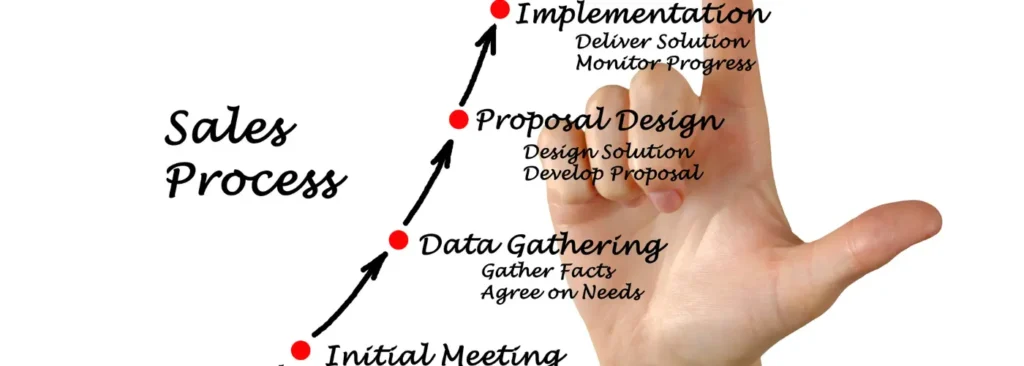
How Leaders Should Approach This
Leaders must treat selling as a capability to be built, not a trait to be hired. Sales training should be continuous rather than event-based. One-off workshops may create short-term energy, but they rarely change behaviour without reinforcement.
Leaders should coach behaviours that lead to outcomes, such as discovery depth, clarity of next steps, and progression between deal stages. These behaviours must be standardised so everyone understands what good performance looks like.
Regular review of real work is essential. Calls, emails, and proposals show clearly whether the approach is being applied. Feedback should be frequent, specific, and practical.
Common Mistakes (and How to Avoid Them)
- Treating training as motivation rather than capability building
- Hiring so-called natural closers and hoping performance spreads
- Over-investing in product knowledge and under-investing in discovery
- Allowing pipeline size to mask poor qualification
- Skipping practice due to time pressure
What Good Looks Like
When sales training is working, the impact is visible in live opportunities. Calls are structured and led by buyer priorities. Discovery conversations are deeper and focused on commercial outcomes. Next steps are clear, dated, and confirmed.
Objections are handled calmly and consistently. Pipeline becomes smaller but stronger, and forecasts improve. Performance increases month to month rather than depending on individual effort or luck. When you start looking to build structured capability, refer to our guide to sales training for Irish SMEs.
How Jordan Wolf Associates Helps
Jordan Wolf Associates supports Irish and UK businesses with practical, implementation-focused improvement.
This includes sales consultancy to diagnose performance blockers, sales training workshops that build repeatable behaviours, sales process design to improve qualification and forecasting discipline, and sales coaching to embed habits over time.
Where relevant, cross-border expertise supports teams selling into Irish and United Kingdom markets. The focus is always on practical change that can be seen in real deals.
Get Your Free Consultation
Get Your Free Consultation
Why not take advantage of our 1-hour (no obligation) sales strategy consultation? We are always happy to discuss practical ways to improve sales performance, prospecting, and commercial capability.
Email: gerard@jordanwolf.ie
Phone: +353 (1) 556 3049
Frequently Asked Questions
Are salespeople born or made?
Most are made. Natural strengths may help early, but consistent results come from structure, coaching, and deliberate practice.
What is the main benefit of sales training?
Clearer discovery, stronger qualification, better next-step control, and higher conversion rates.
Can quieter personalities succeed in sales roles?
Yes. Many high performers are measured and analytical. Structure and preparation support success.
How long does it take to see results?
Behavioural changes can appear quickly, but lasting impact requires ongoing reinforcement.
What should leaders measure after implementation?
Discovery quality, progression between stages, win-loss reasons, and time spent in each stage.